
North Kohala Shares What Worked, and What Didn’t, After Hurricane Lala
Residents posted 122 ideas at a community gathering on September 30. Topping the list: kūpuna check-ins, a communication point in every neighborhood, and self-reliance.
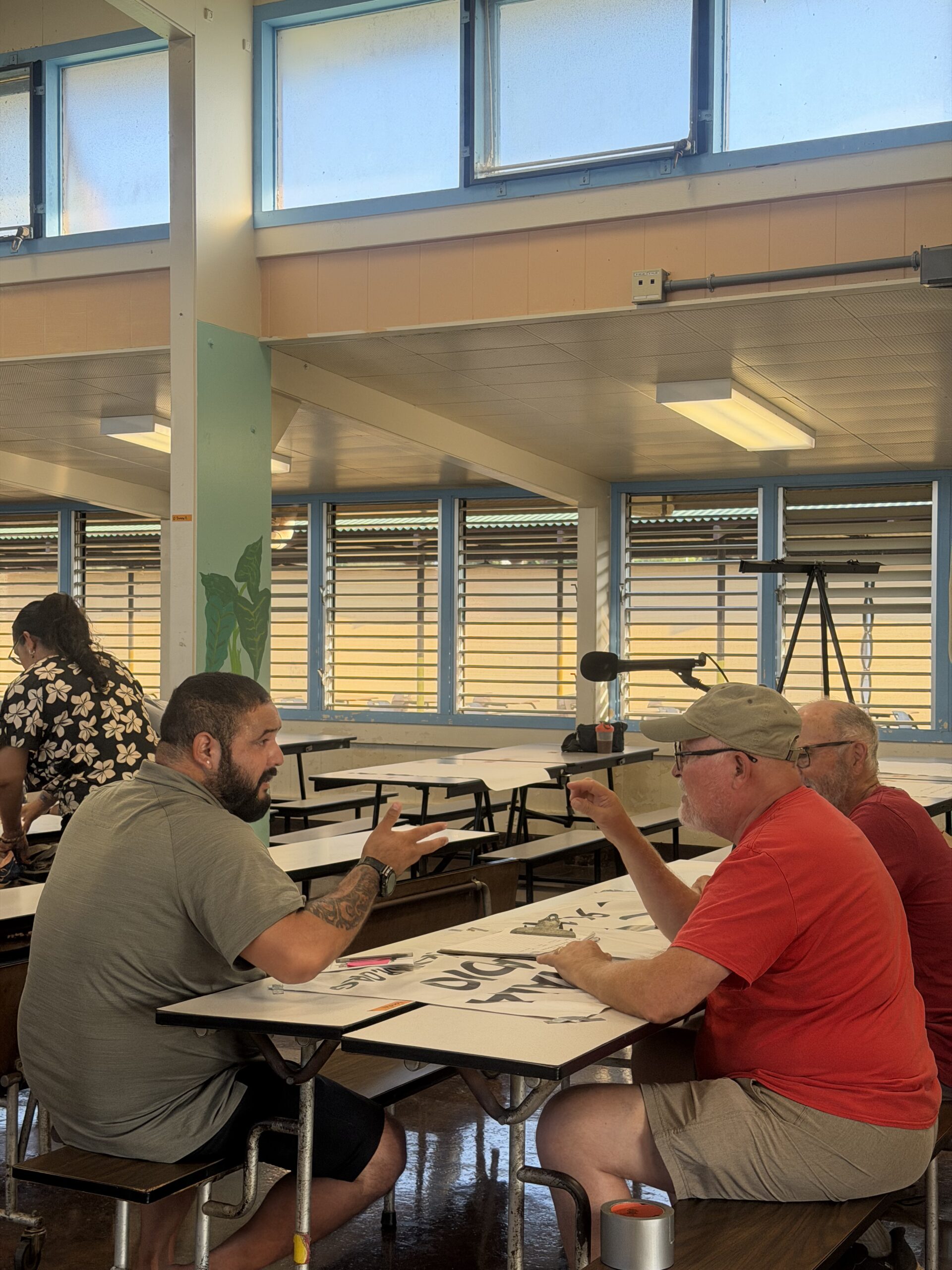
On September 30, North Kohala residents gathered in the Kohala High School cafeteria to talk about Hurricane Lala: what got them through and what has to change before the next storm.
The Kohala Resilience Hub organized the evening with the North Kohala Community Resource Center (NKCRC), the North Kohala Community Development Plan (NKCDP) Utilities Group, Kohala Radio, St. Augustine’s Church, and the North Kohala Community Emergency Response Team.
Posters around the room covered five topics: communication, damage, utilities, safety, and resources. Residents wrote down what worked and what didn’t, then used sticker dots to vote for the ideas that mattered most.
These ideas drew the most votes:
- Build self-sufficiency, person by person. The idea that topped the night: if each person is prepared, their family will be, and if families are, the whole community will be.
- A communication point in each area. Residents called for a buddy system for kūpuna and for making sure kūpuna have radios at home.
- A kūpuna directory. A list of elders and others who need help, and what they need, so neighbors know who to check on.
- Bulletin boards in each area, at the post office for example, for people who can’t use or don’t use social media.
- A sign-up list for kūpuna and people with disabilities at the hospital or health center.
Other ideas with strong support were a shared trailer for laundry loads, more tree trimming on neighboring and empty lots, and longer-lasting repairs to state and county roads. Residents also asked for a shared green waste container in each neighborhood, since the transfer station allows only one load a day.
What worked
Residents also gave credit where it was due. The neighborhood chainsaw response team drew the most votes on the “what worked” posters. Many people asked whether more residents could get chainsaw certified, with sponsors or government funding paying for training.
St. Augustine’s Church was thanked for letting people charge phones and devices from its generator. Residents also pointed to the coconut wireless, generator rentals, community distributions of ice, water and meals, and Kohala Radio’s public service announcements about food, water and ice.
What the survey shows so far
NKCRC also handed out a community needs survey at the gathering and online. The first 57 households to respond tell a story that matches the posters: homes held up, but people were cut off.
- 96% said their home is safe to live in. Damage was mostly downed trees.
- Among households that lost service, 94% lost internet, 83% lost electricity and 74% lost cell service.
- Power was typically out about five days. Homes up Kohala Mountain Road near Kaʻauhuhu Homestead were out 11 to 12 days, and some in Kapaʻau and Hāwī had no internet for two to three weeks.
- 58% had little or no clear picture of the storm’s impact while it was happening.
- 55% of households include kūpuna 65 or older.
- 35% lost work or income, and more than a third of farms, fishers and home businesses were affected.
Percentages are of households that answered each question.
Missed the gathering? Take the survey
If you couldn’t make it on September 30, your experience still counts. Please take the survey at www.northkohala.org/lala. The more households that respond, the clearer the picture of what North Kohala needs before the next storm.
Mahalo to everyone who came out and shared their manaʻo, and to the Kohala Resilience Hub, NKCRC, the NKCDP Utilities Group, Kohala Radio, St. Augustine’s Church and the North Kohala Community Emergency Response Team for bringing the community together.